
BioNGV: The Green Gas That Promotes Decarbonization in Transportation
One of the most viable alternatives to diesel is Local Energy, which is renewable.

The Energy Transition in the transportation sector appears to be an absolute necessity for France, which aims to achieve Carbon Neutrality by 2050. While electric and hydrogen technologies are often viewed by public authorities as the main—if not the only—means of achieving this goal, BioNGV is proving to be a serious and readily available alternative.
Backed by a rapidly expanding industry, an ever-growing infrastructure network, and a well-established reputation among transportation professionals, BioNGV is ready to scale up and play its part.
By combining the benefits of renewables and low-carbon energy with proven technology, BioNGV offers significant potential for a transportation sector seeking concrete solutions to accelerate its decarbonization.

Credits: Getty Images
BioNGV is the green version of natural gas fuel, also known as Natural Gas for Vehicles (NGV).
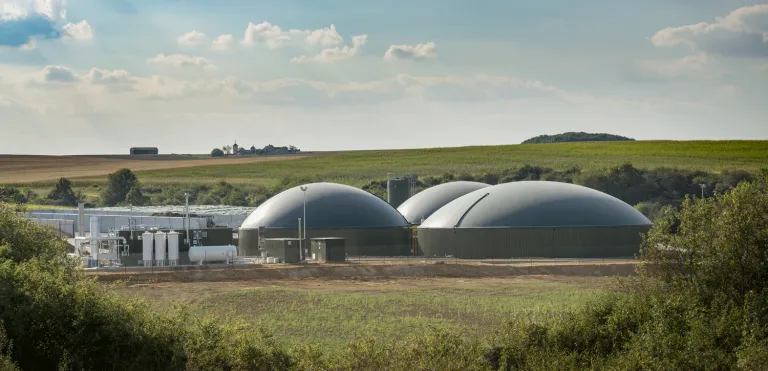
This BioNGV is produced through Anaerobic Digestion of organic waste from agriculture, the agri-food industry, and municipal sources. By fermenting agricultural residues, Livestock Effluents, sewage sludge, or biowastes, biogas is produced naturally.
Once purified, this biogas becomes biomethane—a Renewable Gas that is chemically identical to “conventional” Natural Gas and can be used in NGV-powered vehicles.
In short, BioNGV is Biomethane intended for vehicles.
BioNGV is the renewable version of NGV. As a result, all transportation operators who have already chosen gas or are considering it to power their fleets can benefit from it today.
Like NGV, it produces significantly lower emissions of fine particulate matter, nitrogen oxides, and noise. However, BioNGV’s main advantage lies in its low Carbon Footprint, which makes it a natural tool for accelerating the Decarbonization of transportation.
To better understand this, let’s start from the beginning.
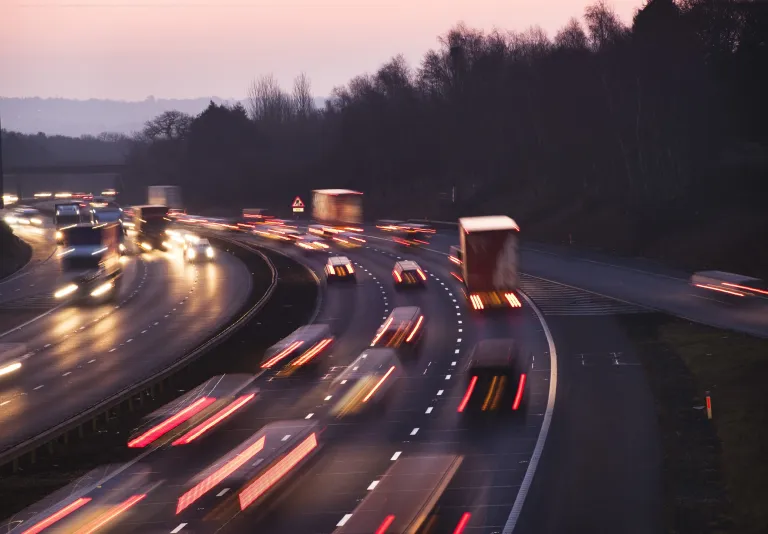
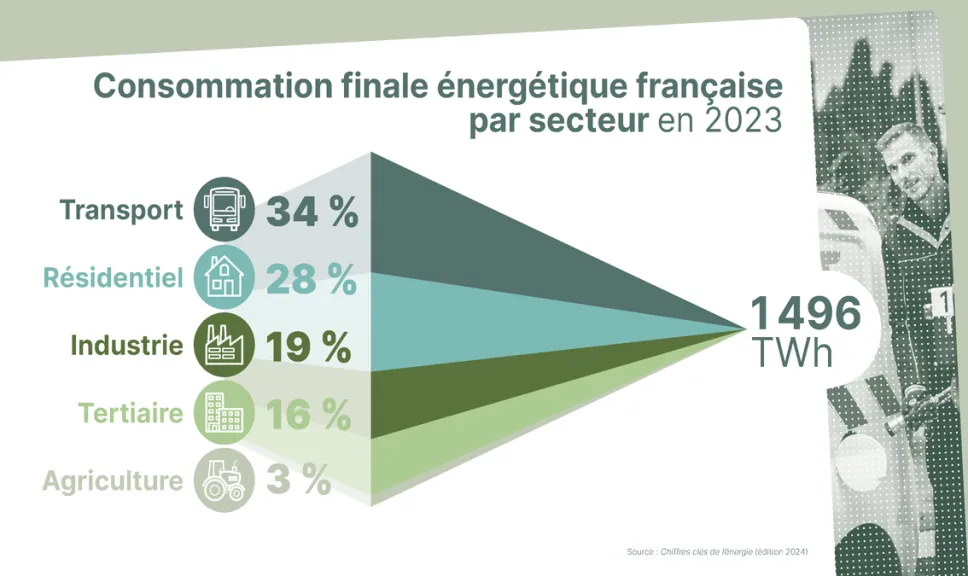
The sheer volume of people and goods being transported across the country makes the transportation sector the largest consumer of energy in France. It alone accounts for more than one-third of the country’s final energy consumption, ahead of the residential and industrial sectors.
Credits: Getty Images
Credits: Patrick Guillon - GRDF
While consumers are gradually shifting away from fossil fuels in favor of electric vehicles, the vast majority of industry players continue to favor fossil fuels, which contribute significantly to transportation’s Carbon Footprint. For many sectors, such as heavy-duty transportation, diesel remains indispensable.
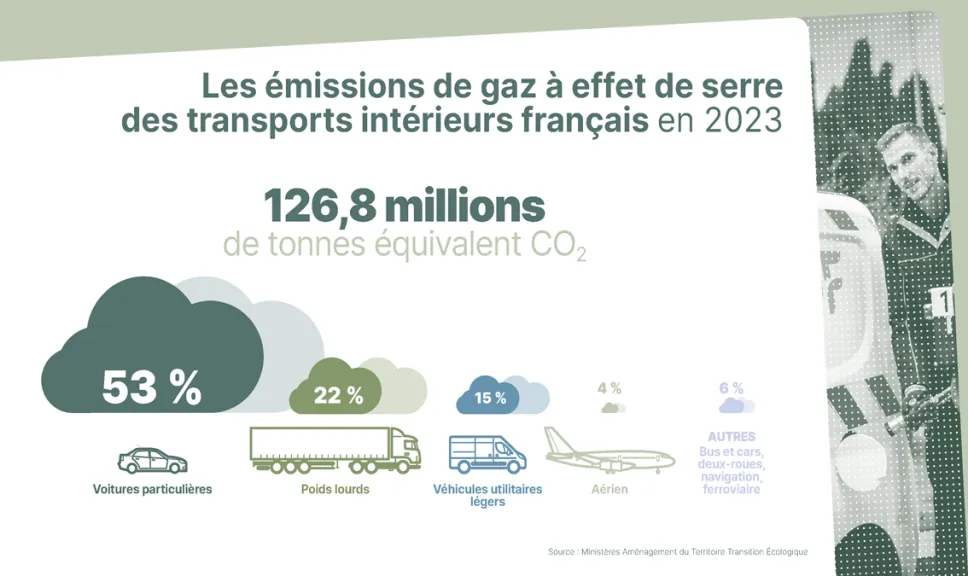
France, which has committed to combating climate change, must, however, reduce greenhouse gas emissions from transportation. These emissions alone account for 31% of the national total, or 126.8 million metric tons of CO₂ each year.
Credits: Patrick Guillon - GRDF
Diesel’s dominance in road transport is primarily due to the power of the available vehicles, their cost, their range, their longer service life, and the ease of refueling, which makes it possible to haul heavy loads or transport groups of people over long distances while keeping costs under control.
In other words, diesel perfectly meets the expectations of the transportation industry.
Thus, despite the rise of several alternatives, the vast majority of newly registered heavy-duty trucks and commercial vehicles still run on diesel.
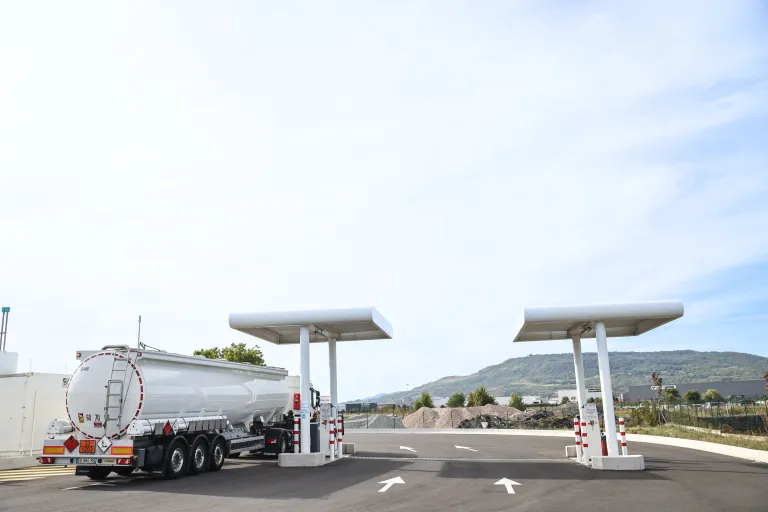
To counter the negative effects of diesel, NGV—and now BioNGV—has long been established as a simple and effective solution, adopted by a growing number of transportation professionals.
Credits: GRDF
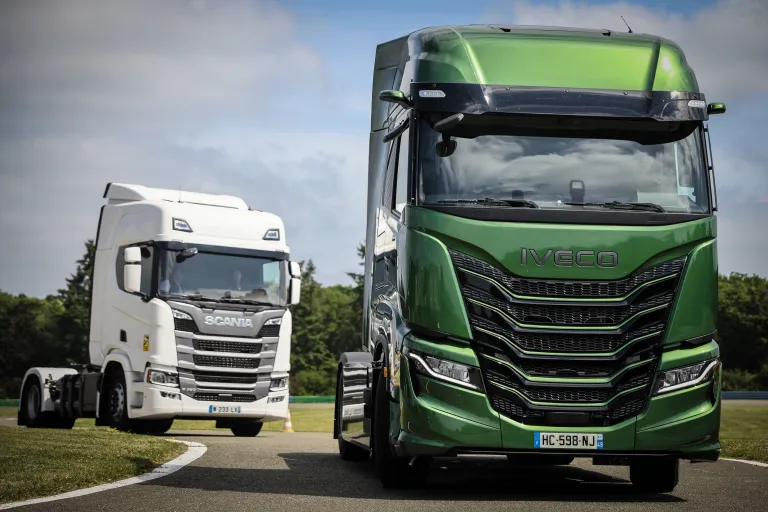
Long before the Energy Transition became a political priority, natural gas had already established itself in heavy-duty transportation. For over forty years, buses, coaches, specialty vehicles, and trucks have been running on natural gas, demonstrating the reliability of this technology.
Far from being an emerging technology, NGV is a mature solution with well-documented performance.
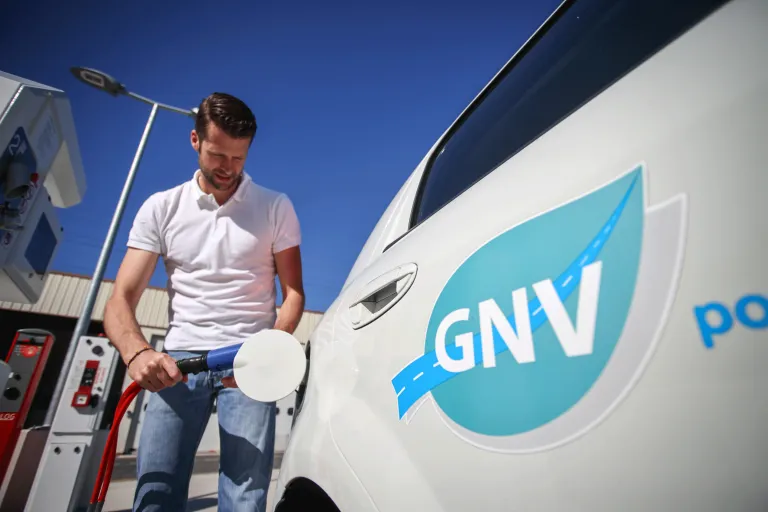
Composed primarily of methane, NGV and BioNGV are made available to transport companies in compressed (CNG/BioCNG) or liquefied (LNG/BioLNG) form at specialized refueling stations. Vehicles are equipped with special tanks designed for one or the other form, allowing them to be refueled.
NGV then requires a suitable internal combustion engine, similar to a gasoline or diesel engine. A mixture of air and gas is injected into the combustion chamber, where it ignites to produce the necessary energy.
Otherwise, the process works exactly the same as with a conventional internal combustion engine.
NGV is the term used to refer to Natural Gas when it is used as a fuel for transportation.
NGV includes Natural Gas used in compressed (CNG) or liquefied (LNG) form.
BioNGV has the same characteristics as NGV, and all gas-powered vehicles are compatible with this biofuel. The only difference lies in how it is produced. BioNGV is produced locally through Anaerobic Digestion of organic waste (agricultural waste, food waste, etc.).
The gas is compressed to 200 bar in the tanks. The term "BioGNC" is used when the gas is Biomethane.
To produce LNG, natural gas is liquefied at -162°C, which allows for the storage of larger quantities of fuel and provides a driving range comparable to that of diesel. This fuel is reserved for heavy-duty trucks, tractors, and maritime transport.
By reducing emissions of fine particulate matter (-85%) and nitrogen dioxide (-90%), while generating 50% less noise, NGV contributes to improving air quality and the living environment in urban areas and along major roadways.
From an operational standpoint, it offers range, payload capacity, and refueling speed comparable to those of diesel—three essential criteria for carriers subject to constraints regarding time, payload capacity, and distances traveled.
Furthermore, the technology is reliable. Natural gas engines are robust and have a proven track record, both among manufacturers and fleet operators. This is also what enables manufacturers to offer comprehensive and competitive vehicle lineups.
Finally, NGV is appealing due to its versatility, as it is suitable for transporting both passengers and goods in all forms.
In summary, NGV allows carriers to provide the same services as with diesel vehicles, without having to overhaul their operations, tie up part of their fleet for hours while recharging, or bear the significant additional costs of less suitable alternatives.
Since they share the same properties, NGV and BioNGV are interchangeable. Same infrastructure, same technologies, same uses. However, BioNGV’s local, renewable, and low-carbon nature allows it to amplify the benefits for the Ecological Transition and local communities.
Credits: Grégory Brandel
According to the carbon database of the French Environment and Energy Management Agency (ADEME), using BioNGV reduces CO₂ emissions by up to 80% compared to diesel vehicles (Euro VI standard).
When considering the life cycle assessment (LCA) of a vehicle running on BioNGV, its carbon footprint is even comparable to that of electric vehicles, even when factoring in the nuclear origin of France’s electricity production.
To assess a fuel’s environmental impact, two approaches coexist: the most common, known as the “tailpipe” approach, involves measuring the emissions produced by the vehicle while it is in operation. This approach inherently favors certain technologies, such as electric or Hydrogen vehicles, which do not emit CO₂ during use. However, emissions generated upstream—such as those from raw material extraction, battery manufacturing, or electricity generation—are not taken into account
Conversely, life cycle assessment (LCA) takes a comprehensive view by incorporating all stages of the supply chain. In the specific case of BioNGV, this analysis incorporates the positive externalities of Green Gas production through waste Anaerobic Digestion, the transportation and distribution of this fuel, and even the utilization of byproducts such as agricultural digestate.
With local governments and private transportation companies investing more and more in BioNGV for their public transit systems or to support local logistics, this renewable fuel is fully aligned with the principles of the Circular Economy.
By consuming energy produced locally within the region, a virtuous cycle is created. For example, the collection of organic waste used to produce Biomethane can be carried out by vehicles powered by that same Biomethane.
This virtuous cycle reduces the need to transport energy and strengthens regional self-sufficiency, in addition to minimizing waste. Better yet, it also helps build a locally rooted industry that generates jobs that cannot be outsourced, provides supplemental income for farmers, and creates added value for communities by transforming waste into resources.
The Energy Transition in transportation is not simply a matter of choosing between different technologies. While the goal of Decarbonization is shared, it is important to let industry professionals choose which technology to prioritize, based on their specific needs.
Credits: GRDF
Where electric solutions reach their limits—limited range, long charging times, and the significant weight and bulk of batteries—BioNGV stands out as the best alternative to diesel for heavy-duty vehicles in general, in terms of flexibility.
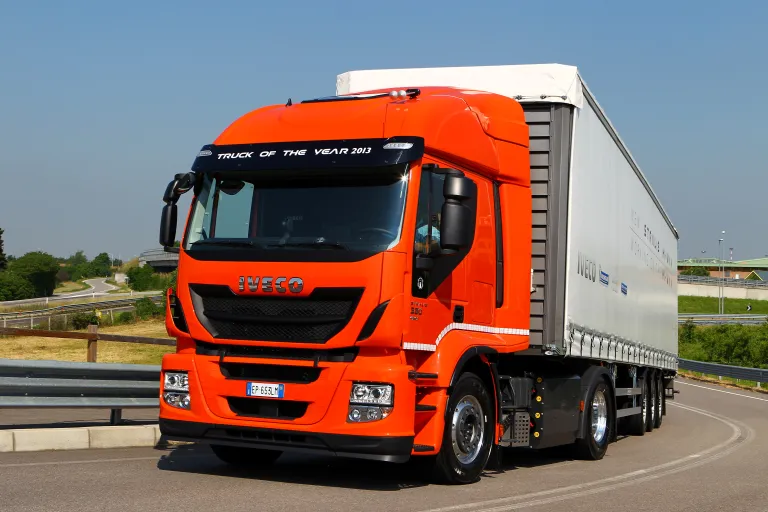
Long range: A heavy-duty truck running on BioNGV can travel 1,000 kilometers or more on a single tank of fuel, depending on whether it uses compressed natural gas (CNG) or liquefied natural gas (LNG). This range rivals that of diesel and far exceeds that of current electric trucks, which rarely exceed 300 kilometers under real-world conditions.
Fast refueling: Filling up with gas takes just a few minutes, whereas recharging an electric vehicle can tie it up for several hours. This ensures maximum vehicle availability.
Uncompromised payload: Unlike electric vehicles, which require heavy batteries, BioNGV has virtually no impact on a vehicle’s payload capacity.
Cost-effective and diverse vehicle options: many manufacturers offer extensive lineups of BioNGV-powered vehicles, which are often technically very similar to their diesel counterparts. Prices are thus attractive compared to electric or Hydrogen alternatives, and the total cost of ownership (TCO) remains competitive.
TCO, or “ Total Cost of Ownership ” (total cost of ownership), is a metric that helps determine the actual cost of a vehicle or piece of equipment, far beyond its simple purchase price. Specifically, TCO adds up all expenses associated with using an asset throughout its entire lifespan: purchase, fuel or energy, maintenance, repairs, insurance, taxes, and even resale or disposal at the end.
With very high purchase prices and the limitations outlined above, electric vehicles remain out of reach or unsuitable for many transportation operators, despite clear advantages for short, regular trips in urban areas where range is not an issue and access to charging is easy.
Often touted as the fuel of the future, Hydrogen appeals for its potential range, fast refueling, and zero emissions during use. But these promises have yet to be fulfilled: the cost of producing Renewable Hydrogen—the only environmentally viable option—remains high, the selection of compatible vehicles is still very limited, and the network of refueling stations remains in its infancy, both in France and across Europe.
While progress is being made, hydrogen is not yet a competitive solution on a large scale.
In practice, local governments and businesses need solutions that are immediately operational, financially sustainable, and compatible with their operational constraints. This is precisely what BioNGV offers, and it undoubtedly explains why transportation stakeholders are so interested in it.
Credits: GRDF
Beyond the Biomethane Value Chain, BioNGV can count on the commitment of key energy players, including GRDF and major energy suppliers, who are investing in the development of dedicated infrastructure, thereby supporting the development of an alternative fuel that is local, low-carbon, and immediately available.
Credits: Patrick Guillon - GRDF
Thanks to the advantages of BioNGV, which largely meets the needs and constraints of mobility stakeholders, manufacturers can tailor their offerings of heavy-duty trucks, buses, and coaches, thereby providing them with the widest possible range of options to help them achieve Decarbonization of their operations.
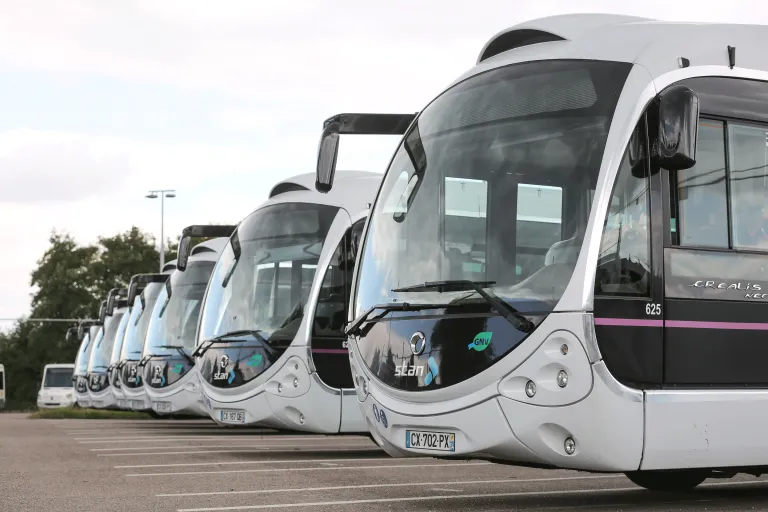
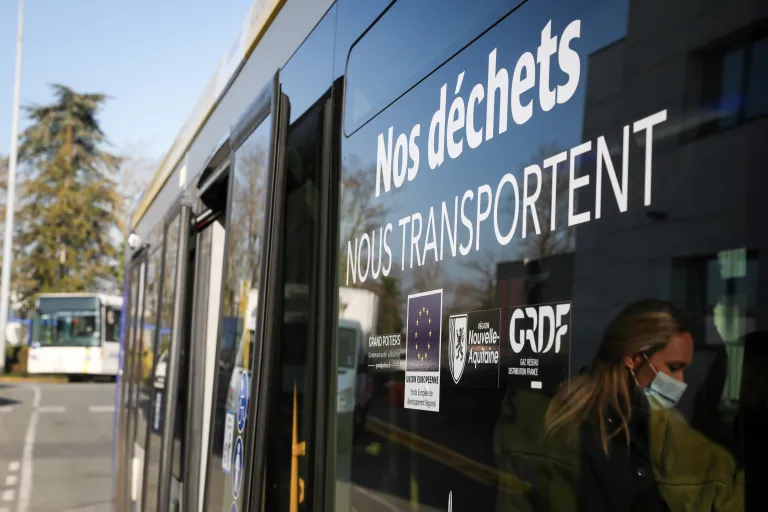
More and more local governments are equipping their fleets of utility vehicles, dump trucks, and public transit vehicles with gas-powered models, as part of a concrete and proactive Energy Transition.
In the private sector, transportation companies and major retail chains are not far behind: they are incorporating BioNGV-powered heavy-duty trucks into their logistics operations, particularly for supplying urban hypermarkets. It is no longer uncommon today to see trucks running on Green Gas in city centers; they are quieter and far less polluting than their diesel counterparts.
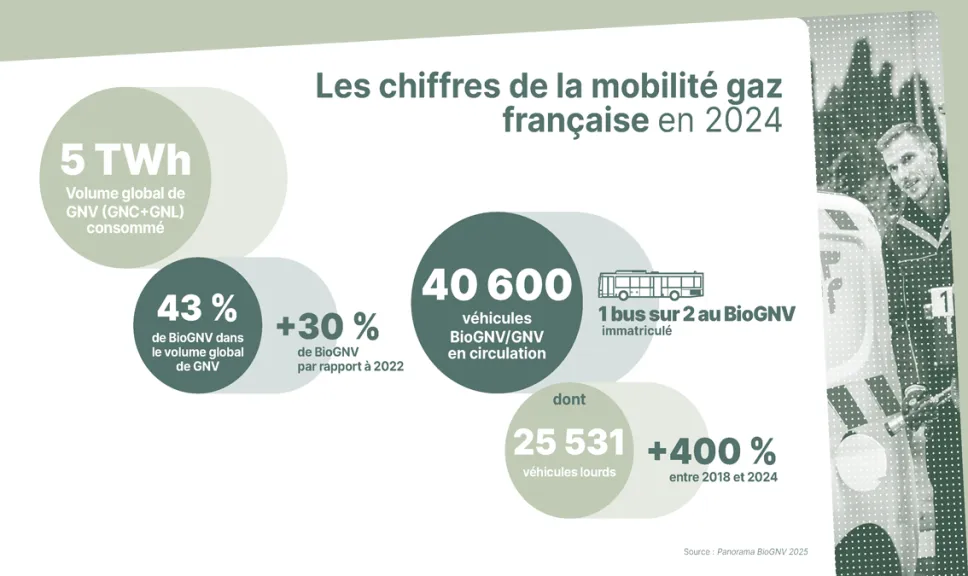
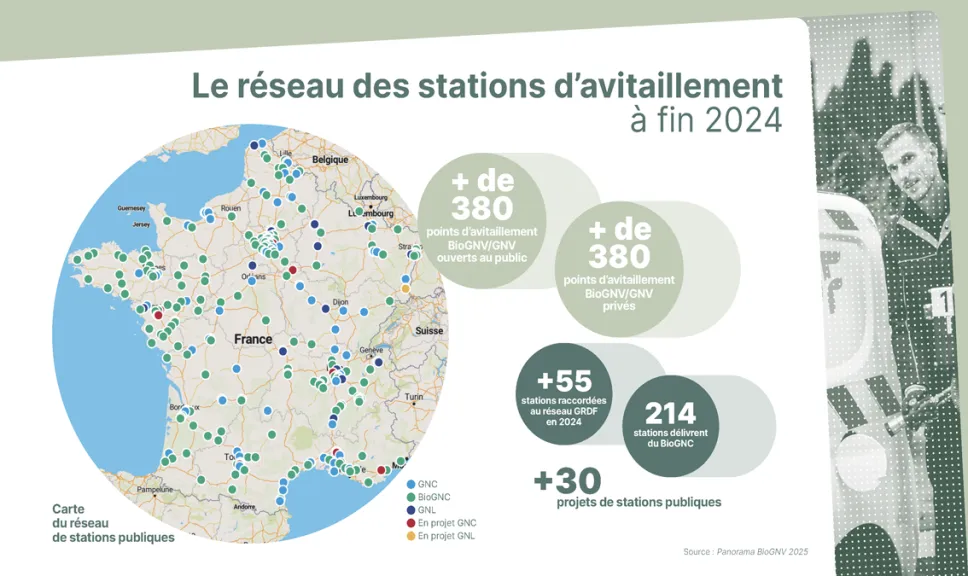
The growth of this sector is also evident in the expansion of the refueling network. There are now more than 760 NGV/BioNGV stations in France, evenly split between public and private stations (see figures opposite).
The establishment of new stations—particularly in suburban and rural areas—is crucial for attracting new users and supporting the sector’s growth.
Credits: Patrick Guillon - GRDF
In 2024, more than 43% of the NGV distributed was BioNGV.
Another often-overlooked lever in the deployment of BioNGV: retrofitting. This involves converting an existing diesel vehicle by equipping it with a gas-powered engine. This technical solution, which is already available and regulated in France, extends the service life of vehicles, while drastically reducing their CO₂ emissions and air pollutants.
It thus addresses a twofold challenge: an environmental one, by limiting the production of new vehicles, and an economic one, by offering a less costly alternative than purchasing a new vehicle. For transport companies, local governments, and fleet managers, it is a pragmatic way to embark on the transition without idling or giving up vehicles that have already been written off.
Despite its undeniable and widely recognized advantages, the widespread adoption of BioNGV as a widely recognized and adopted solution for Decarbonization in the French energy sector continues to be hampered by a number of obstacles.
Credits: GRDF
The sector is ready to scale up, and the commitment of economic stakeholders now depends on the recognition of BioNGV’s environmental value in regulations—through a more proactive policy, appropriate tax measures, and the integration of life-cycle analysis. BioNGV must be recognized as an essential component of the Energy Mix for future carbon-free transportation.
Greater political support would help position BioNGV more effectively among the priorities of the Energy Transition. All too often, official stances focus on electric or Hydrogen technologies, to the detriment of this effective and competitive solution—one that is already mature, available, and competitive. This is currently the case with the heavy-duty vehicle CO₂ regulation adopted by the European Commission last year, and its review provisions must be utilized to amend the text.
A clear and favorable tax structure could remove the obstacle posed by the cost of purchasing these vehicles, which is still perceived as a barrier by some carriers despite an attractive total cost of ownership (TCO). The investment can prove profitable for professionals, provided they take a long-term view.
Life-cycle analysis, at both the French and European levels, would have several positive effects for BioNGV:
Faced with these challenges, certain organizations and local stakeholders have implemented initiatives and support mechanisms that are essential for building a strong industry.
Credits: GRDF
This hands-on approach, grounded in local realities, fosters synergies among public officials, farmers, transport operators, and energy providers. It provides a powerful lever to kickstart a larger-scale rollout and encourage public authorities to face the facts: BioNGV offers a solution for Decarbonization of transportation that we must build upon.
Some regions or Intermunicipal Authorities are going even further by supporting the installation of refueling stations, co-financing vehicle fleets, or launching calls for projects to stimulate local demand.
Support for agricultural Anaerobic Digestion is a fundamental and essential component in fostering the growth of BioNGV. By recycling organic waste from local farms, these projects anchor BioNGV production in local communities and strengthen their energy self-sufficiency.
Building on the momentum that has been established and the convictions that drive the industry’s stakeholders, the sector can be confident about the development of BioNGV in the short and medium term.
Credits: GRDF
By 2033, the industry has set a clear goal for the development of BioNGV: 100% BioNGV at refueling stations, with a 50% share by the end of 2025.
One of the major challenges in achieving this is the widespread adoption of BioNGV in so-called captive transportation sectors: city buses, waste collection vehicles, retail logistics, and other municipal fleets… These applications, which involve repetitive routes, are particularly well-suited to Renewable Gas, both technically and economically.
Ultimately, widespread use of BioNGV could prevent millions of metric tons of CO₂ emissions per year, while reducing air pollution in densely populated areas.
In conclusion, as France accelerates its Energy Transition, BioNGV represents much more than just a technical alternative: it embodies a pragmatic, region-specific vision of carbon-free mobility. Its local roots, its ability to convert our waste into energy, and its effectiveness in the field make it a valuable ally for transportation professionals, particularly in areas where electric vehicles cannot solve every problem.
But for BioNGV to realize its full potential, collective action will be needed: public authorities to recognize its value in Decarbonization and strengthen incentives, manufacturers to expand the supply, and local communities to support the growth of infrastructure.
The challenge is no longer to demonstrate the solution’s relevance, but rather to provide it with the means to scale up. For it is by combining industrial ambition with local commitment that BioNGV will be able to fully contribute to Carbon Neutrality in the transportation sector and to the country’s Energy Sovereignty.