
Reindustrialization and Decarbonization: A Challenge Within Our Reach
The Ecological Transition and industrial sovereignty are far more compatible than people realize.

This urgency was highlighted in the report submitted to the European Commission in September 2024 by Mario Draghi, in which the former president of the European Central Bank emphasized the vital need for the European Union to adopt a genuine industrial strategy. Renewables—and Green Gas in particular—must play a key role in this strategy.
Long considered incompatible, reindustrialization and Decarbonization are now emerging as two sides of the same ambition: building a sovereign, innovative, and responsible industrial sector.
The good news is that this transition is already underway, with Carbon Neutrality by 2050 as the target. Many solutions are already being implemented. Among them, natural gas is emerging as an indispensable asset thanks to the rapid growth of Renewable Gases and the development of Energy Efficiency and carbon-capture technologies.
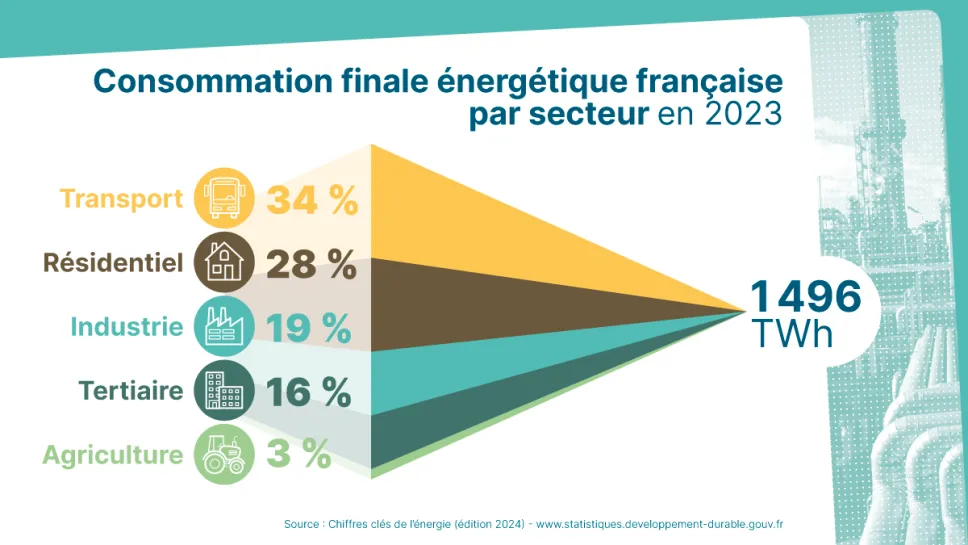
In France, industry is one of the largest consumers of energy. It alone accounts for 20% of the country’s total final energy consumption. Companies in the sector primarily use two energy sources: electricity and Natural Gas account for more than 70% of the energy consumed. This is due to the intensive use of Natural Gas in sectors such as chemicals, materials, and agri-food, while electricity is widely used in all industrial equipment. This effectively positions natural gas and Green Gas as essential drivers for the Decarbonization of the country’s industrial infrastructure.
Credits: GRDF
Credits: GRDF
There are several reasons for the industrial sector’s high energy consumption:
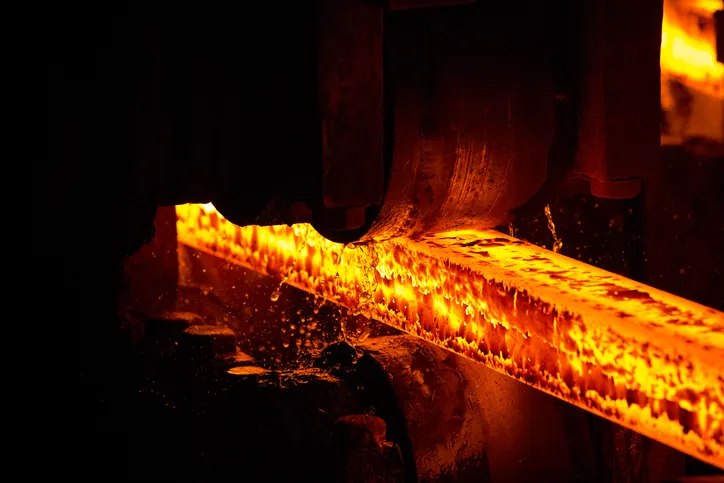
Many industrial processes, such as metallurgy, glassmaking, ceramics, and cement production, require very high temperatures, often exceeding 1,000°C. Heating these materials consumes a tremendous amount of energy, often in the form of natural gas and electricity. But that’s not all.
Steam production, for example, also accounts for a large portion of energy consumption in industries such as chemicals, food processing, and paper and pulp. Steam is used in these industries for several essential purposes, such as heating raw materials and cooking certain products; generating electricity and powering machinery; removing moisture in the manufacture of paper, food, and chemicals; operating pistons and hydraulic machinery; or, quite simply, disinfecting equipment and surfaces.
Some industrial processes still have low energy efficiency, wasting part of the energy in the form of what is known as “Waste Heat.”
Industry uses heavy equipment to heat, cut, mold, and assemble materials, which consume large amounts of electricity and fossil fuels.
Transporting resources to factories and distributing finished products requires trucks, trains, and ships, all of which burn fuel.
Factories and warehouses require air conditioning, heating, and lighting systems to ensure adequate working conditions.
At a time when France is seeking to regain its economic sovereignty, it must simultaneously reduce its greenhouse gas emissions to meet its climate commitments.
This is a major challenge, given that industry alone accounts for 20% of CO₂ emissions in France—78 million metric tons per year—including industrial processes and energy combustion in factories.
The sector is thus the third-largest emitter of greenhouse gases in France, behind transportation and agriculture.
Credits: Jahangir Alam Onuchcha / 500px
Based on this assessment and in light of the climate emergency, French industry is actively committed to the Energy Transition, in line with the National Low-Carbon Strategy (SNBC). The goal is ambitious: to reduce greenhouse gas emissions by 35% by 2030 nationwide, and by 81% by 2050 compared to 2015 levels.
Browse the roadmap for the National Low-Carbon Strategy to learn more.
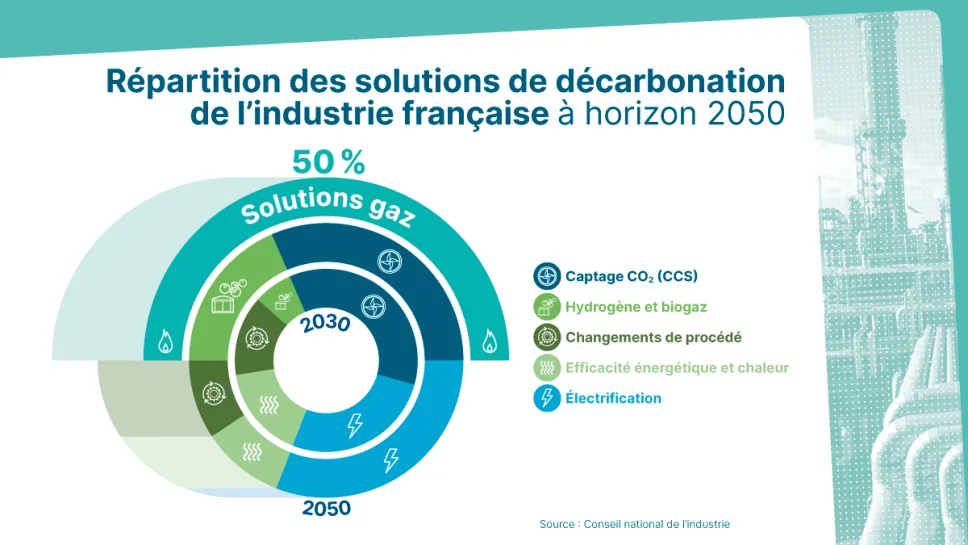
In France, given our nuclear heritage, the transition to “all-electric” is often presented by public authorities as the only viable approach to achieving our decarbonization goals. However, while electrification clearly has a major role to play, it is not always a technically and economically viable solution for Decarbonization of French industry, and manufacturers are favoring other solutions.
Here’s why.

Credits: Andrew Holt
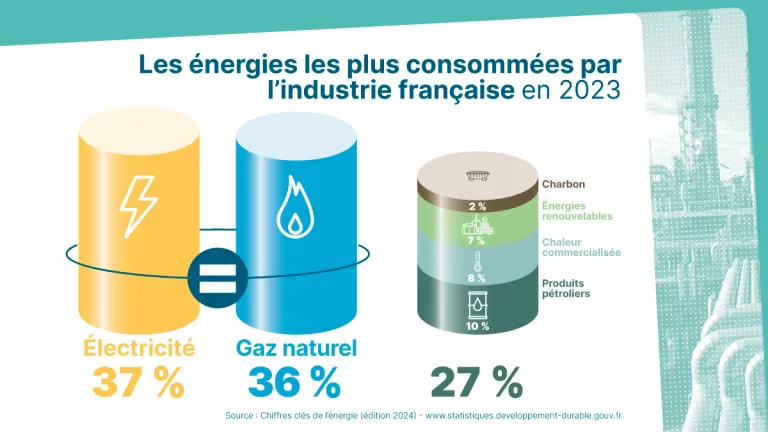
With gas and electricity consumption at similar levels—each accounting for more than one-third of the energy used by French industry—the hurdle to overcome in order for electricity to meet all of the sector’s needs appears very high. And that’s without even considering the very nature of certain processes, which make the transition difficult.
Credits: GRDF
While the transition to electricity for certain industrial activities in France offers undeniable benefits, it faces technical and economic challenges that go beyond the mere issue of the amount of energy to be produced:
Colossal investments are needed to modernize the electrical infrastructure. RTE, the electricity transmission system operator, recently announced that it plans to invest 100 billion euros by 2040 to strengthen, expand, and ensure the connection of the grid to climate change. More than half of this investment is earmarked for connecting new consumption centers, such as data centers, to the grid and for integrating low-carbon energy sources, particularly nuclear and Renewables.
Electricity rates are often even higher than those for Natural Gas or other fossil fuels, due to taxes and associated production costs. Above all, fluctuations in electricity prices—particularly during periods of high demand—make it difficult for manufacturers to control costs over the long term.
Thanks to its existing infrastructure, the gas network makes it easy to store energy—including renewables—and make it available quickly. Electricity storage and ad hoc responses to consumption peaks, on the other hand, are much more complicated outside of gas- or coal-fired power plants—with the exception of massive batteries, which are very expensive and not yet available.
Certain industrial sectors, such as materials and metallurgy, require very high temperatures for their production processes. Electricity, although versatile, is not always suitable for generating these temperatures without incurring very high costs.
Credits: GRDF
Beyond electrification, manufacturers have several complementary ways to reduce their greenhouse gas emissions. There are both mature solutions and emerging ones that enable the sector to take action today in support of the Ecological Transition.
Here are five actions that, together or separately, can deliver concrete results without disrupting the necessary balance between electricity and natural gas.
Credits: GRDF
Since you can’t improve what you don’t measure, the first step an industrial company must take to reduce its Carbon Footprint is to accurately understand its energy consumption in order to reduce it.
An energy audit thus makes it possible to map energy flows and identify the most energy-intensive areas. This visibility is the first prerequisite for taking effective action.
Once consumption patterns have been analyzed, the company can identify areas for optimization: obsolete equipment, waste, energy-intensive processes, and more. This makes it possible to prioritize the most cost-effective and impactful actions, whether they involve technical or organizational improvements.
Adjusting the combustion process plays a key role in Decarbonization of industrial activity. It helps reduce fuel consumption and lower CO₂ emissions. Here’s how:
Proper combustion control maximizes the energy produced from a given amount of fuel, which reduces consumption and, consequently, CO₂ emissions.
Proper combustion control also allows facilities to adapt to the use of cleaner fuels, such as Biogas or Hydrogen, which emit little CO₂, and alternative fuels (Biomass, recovered waste, etc.).
Waste Heat refers to the thermal energy produced by an industrial process that, instead of being utilized, is simply lost through exhaust gases, cooling gases, or heat-transfer fluids used in production processes.
Recovering and reusing Waste Heat offers two major benefits: it not only allows manufacturers to reduce their energy bills and thus lower their production costs, but it also helps reduce their Carbon Footprint.
How can Waste Heat be recovered?
Recovering Waste Heat involves using specific technologies to capture it and convert it into useful energy.
Solutions exist, at various stages of Research and Development. Among the innovative technologies available are:
Waste Heat can account for up to 50% of the energy consumed by certain industrial processes.
French industry therefore has enormous potential for reusing this Waste Heat.
According to ADEME (the French Environment and Energy Management Agency), manufacturers release 109.5 TWh of unused heat each year, representing 36% of their fuel consumption. By way of comparison, this represents about a quarter of France’s annual electricity consumption.
More than half of this Waste Heat is at a relatively high temperature (>100°C), making it easily recoverable for other uses (district heating, preheating raw materials, electricity generation, etc.).
There are several financial incentives and support programs from the French government or the European Union to assist manufacturers in their decarbonization efforts.
The Decarb Ind 2025 Call for Projects
Launched by ADEME (the Ecological Transition Agency), the Decarb Ind 2025 call for projects is part of the France 2030 plan within the “Fit for 55” legislative package led by the European Commission. It aims to support the Decarbonization of industrial activities through grants of up to 30 million euros. The call for projects was open until March 13, 2025.
Energy Savings Certificates (EECs)
This is a program established by the government to encourage manufacturers to invest in low-carbon solutions and improve their competitiveness by reducing their energy bills. It requires energy suppliers to promote Energy Efficiency measures among their customers. The EETA (Energy Environment Technical Association) is tasked with supporting and informing market participants on how to use the program.
Among the various possible solutions to address the climate emergency and help industry adapt to the challenges of Decarbonization, Green Gas has emerged in recent years as one of the most promising.
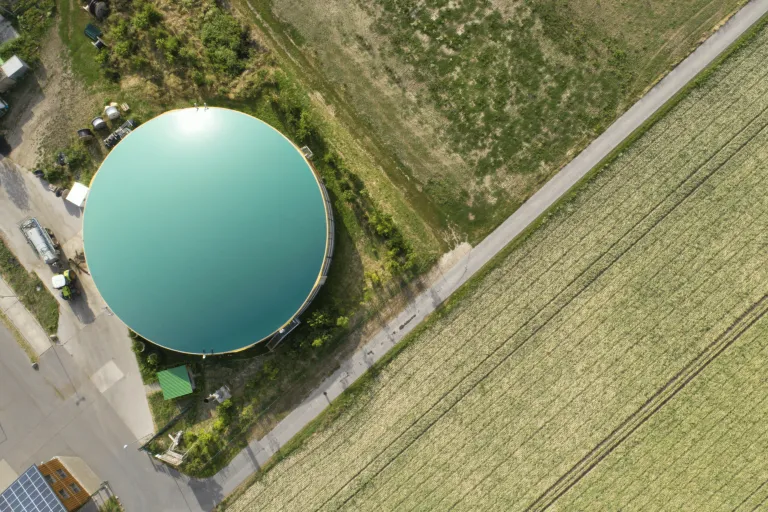
Increasingly widespread and experiencing strong growth, Biomethane offers manufacturers a renewable, locally produced energy source that helps reduce their greenhouse gas emissions.
Produced through the decomposition of organic matter—such as agricultural waste, sewage sludge, food waste, or residues from the agri-food industry—this Green Gas has a particularly low carbon footprint, given its origin and the virtuous cycle in which it participates.
It has the same characteristics as Natural Gas and can therefore be injected into existing gas networks and used in the same way as fossil gas. Since both are composed of the same molecule, methane (CH4), it is fully compatible with existing industrial processes, whether for producing heat or even electricity via Cogeneration plants.
Biomethane can thus gradually replace Natural Gas without requiring adjustments by industrial operators or changes to production equipment. It is an essential component of a competitive Decarbonization strategy.
These are electronic certificates created by the European Union that certify that a given quantity of Green Gas has been produced from renewable sources. They play a key role in promoting this green energy on the market.
Each MWh of Biomethane produced entitles the producer to a Certificate of Origin, which can be sold separately from the gas itself. Thus, a company or industry seeking to implement decarbonization can purchase these guarantees to demonstrate its consumption of Renewable Gas, even if it physically receives a blended gas.
Find all the details about Certificates of Origin at GRDF.fr.
What are the benefits for industry?
To accelerate the production and development of biomethane, market participants have created Biomethane Purchase Agreements (BPAs): long-term Biomethane purchase contracts entered into directly between a producer and a consumer—typically a business or industrial facility seeking to implement Decarbonization of its operations. Modeled after PPAs (Power Purchase Agreements) used in the renewable electricity sector, BPAs help ensure a stable supply of Renewable Gas.
What are the benefits for industry?
While optimizing production processes is key, mobility also plays an essential role in the transition to a more environmentally friendly model. There are many types of travel associated with industrial activity: transporting raw materials, shipping finished products, employee commuting… Each of these aspects has an impact on greenhouse gas emissions.
Alongside hydrogen and electrification, biomethane in the form of BioNGV (Natural Gas for Vehicles) is currently one of the most mature alternatives for decarbonizing transportation. By 2025, BioNGV will already account for more than 50% of all NGV consumed by the heavy-duty truck fleet nationwide.
The goal of the process is to capture carbon before it is emitted into the atmosphere. Although costly, it is essential to help sectors that are difficult to achieve Decarbonization, such as the steel and cement industries, for example. Capture can be achieved through:
It is scheduled to be commercialized in 2026, with the potential to reduce CO₂ emissions by 8 million metric tons per year if 2,000 industrial boilers were replaced.
In conclusion, climate challenges and the emerging new world order require France to shift gears when it comes to Decarbonization. Our country has many tools at its disposal to accelerate this transition, which—beyond being a necessity—must be viewed as an opportunity: by investing in innovation and Low-carbon Energy, industrial companies are contributing to the national effort that combines competitiveness and sovereignty. The future is being built today.